

THERMO-MECHANICAL CONTROL PROCESS STEEL MARKET REPORT OVERVIEW
Thermo-mechanical Control Process Steel Market was valued at USD 391.8 million in 2024 and is expected to reach USD 411.79 million in 2025, growing to USD 613.06 million by 2033, with a CAGR of 5.10% during the forecast period.
Thermo-mechanical manage system (TMCP) metallic is a specialized grade of metallic renowned for its tremendous mechanical residences, done thru a meticulously managed manufacturing technique. This method involves numerous key steps, beginning with hot rolling, in which the metal is subjected to high temperatures and pressure to shape it into the desired form. Crucially, throughout this warm rolling degree, the temperature and deformation of the steel are carefully regulated to ensure particular control over its microstructure and mechanical characteristics.
Following the hot rolling level, TMCP metal undergoes a managed cooling manner. This segment is just as important as the hot rolling degree, because it determines the final residences of the metallic product. By carefully controlling the cooling fee and temperature gradients, producers can manipulate the internal structure of the steel, resulting in a product with stronger strength, durability, and weldability as compared to conventionally processed steel.
The global COVID-19 pandemic has been unprecedented and staggering, with the market experiencing higher-than-anticipated demand across all regions compared to pre-pandemic levels. The sudden market growth reflected by the rise in CAGR is attributable to market’s growth and demand returning to pre-pandemic levels.
The COVID-19 pandemic posed several challenges to the thermo-mechanical control process (TMCP) steel market, primarily due to disruptions in manufacturing and construction as countries implemented lockdown measures to prevent the spread of the virus, and steel plant and production There were operational challenges with labor shortages and restrictions on production handling These restrictions reduced production and steel production, affecting TMCP steel a are offered in the market.
Additionally, the construction and infrastructure downturn caused by the pandemic had a significant impact on the demand for TMCP steel. Many manufacturing sites temporarily shut down or operated at limited capacity, eliminating the need to produce specialty steel products, such as TMCP steel. This drop in demand compounded the challenges faced by steelmakers, leading to excess sales and declining profits.
LATEST TRENDS
Increasing Demand for High-Strength and Lightweight Steel
The demand for sturdy yet light-weight substances represents a key fashion within the thermo-mechanical control manner (TMCP) steel marketplace, driven by using the evolving wishes of automobile, aerospace, creation and different industries They may be executed. This fashion is pushed by using the choice to improve efficiency, reduce gasoline consumption and growth common overall performance across a number of merchandise. To meet those necessities, TMCP metal stands proud as an attractive answer because of its unique houses. Through precise control of rolling and cooling process, TMCP steel achieves optimized microstructure, offering unique mechanical properties such as high strength, toughness, weldability etc. Importantly, TMCP steel can achieve these properties while maintaining the density of it is very low.
THERMO-MECHANICAL CONTROL PROCESS STEEL MARKET SEGMENTATION
By Type
Based on type the market can be categorized into 5 – 20 mm, 20 – 50 mm, 50 – 100 mm, 100 – 120 mm.
- 5 – 20 mm: This category includes thermo-mechanical control process steel plates with thicknesses ranging from 5 to 20 millimeters, suitable for applications requiring high medium strength.
- 20 – 50 mm: This category contains 20 to 50 mm thick TMCP steel plates, which are typically used in applications requiring high strength and stability.
- 50 – 100 mm: This category consists of 50 to 100 mm thick TMCP steel plates, typically used in heavy applications and structures requiring exceptional load carrying capacity.
- 100 – 120 mm: This category includes high-strength TMCP steel plates, ranging in thickness from 100 to 120 mm, designed for special applications with stringent strength and performance requirements.
By Application
Based on application the market can be categorized into Chemical Industry, Building, Machinery, & Others.
- Chemical Industry: TMCP steel finds applications in the pharmaceutical industry, where its corrosion and durability are important for equipment and containers.
- Building: TMCP steel is primarily used by the construction and construction sector, used for structural, reinforcing and load-bearing components.
- Machinery: TMCP steel is widely used in the manufacture of machinery and tools to provide the required strength and corrosion resistance for various components and parts.
- Others: This category contains other applications where TMCP steel is used, such as energy, transportation, mining industries, and others.
DRIVING FACTORS
Building a Stronger Foundation for Modern Infrastructure
The thermo-mechanical manipulate method (TMCP) steel growth in production and enterprise is fueled by way of its precise mechanical properties, making it the best cloth for nowadays’s industrial TMCP metal boasts first-rate electricity, durability and weldability, and guarantees structural integrity and sturdiness of buildings, bridges and different big-scale systems The vital characteristics are as follows Worldwide , the charge of urbanization is increasing and infrastructure projects are getting more and more essential and therefore the need for robust and reliable uncooked materials like TMCP metal is of extreme significance and foundation robust installed for current infrastructure.
Furthermore, TMCP metallic plays an important position in addressing the developing demanding situations faced with the aid of the development industry in particular in phrases of sustainability and resilience due to growing emphasis on environmentally pleasant creation practices and the want for infrastructure which can resist intense weather activities and natural screw ups TMCP metal emerges as a desirable fabric because of its durability and versatility By incorporating TMCP metal into infrastructure initiatives, people who their implementation can beautify the toughness, safety and sturdiness of the constructed environment, and lay the foundation for a greater resilient and sustainable destiny. Overall, the demand for TMCP metallic in creation and infrastructure is predicted to maintain to upward thrust as societies around the arena prioritize the development of present day, sustainable and resilient infrastructure.
Enabling Lightweight and High-Performance Solutions
The adoption of thermo-mechanical control process (TMCP) metals in the automotive, aerospace and aerospace industries has the potential to enable lighter and more efficient solutions In the automotive industry, which also extends on a regular basis, this improves fuel efficiency and reduces emissions, as smaller cars require less energy to run. Additionally, TMCP’s lightweight steel components contribute to the vehicle’s handling and performance, providing drivers with a faster and more efficient driving experience.
Similarly, in the aerospace industry, the high strength and weight properties of TMCP steel make it an attractive material for aircraft parts. By using TMCP steel in critical structural parts such as fuselage, wing parts, landing gear, etc., aircrews can achieve significant weight savings without compromising strength or durability This reduction in aircraft weight contributes to lower fuel consumption and operating costs, also as a longer runway and payload capacity P excellent weldability and hardness of steel Ensures the integrity and reliability of aerospace structures, enhancing safety and longevity in harsh operating environments. Overall, the adoption of TMCP steel in the automotive, aerospace, and aerospace industries enables lightweight and high-performance solutions that meet the stringent requirements of today’s transportation systems.
RESTRAINING FACTOR
The Financial Barrier to Adopting Advanced Steel Manufacturing
Thermo-mechanical control process (TMCP) steel market faces a major restraining factor due to high material costs and capital investment required to adopt advanced steel production processes -Helps for productivity costs increase compared to conventional methods The specialized nature of the equipment and the need for accurately controlled throughout the production process increases operating costs, increasing the cost of Overall TMCP steel production increases.
Furthermore, the initial production and installation of TMCP steel requires a significant capital investment, making it a financial barrier for many steelmakers, especially small or low-capitalization With such large-scale - May be reluctant to adopt TMCP technology due to concerns about financial risk and uncertainty associated with investment. Overall, the high manufacturing costs and capital investments required to acquire advanced steels such as TMCP constitute a significant financial barrier for steel producers. Although TMCP steel offers superior mechanical properties and productivity benefits, the high upfront investment and operating costs associated with its production may deter some companies from adopting this technology.
OPPORTUNITIES
Enhanced Strength and Toughness
TMCP technology significantly improves the strength and toughness of steel plates. This advancement allows for the production of high-strength steels with yield strengths exceeding 450 MPa, while maintaining desirable elongation, ductility, fracture toughness, and weldability. Such properties are essential for applications in industries like shipbuilding, offshore structures, and pipelines.
Improved Weldability and Reduced Alloying Costs
By refining microstructures through controlled rolling and cooling, TMCP reduces the need for extensive alloying. This results in better weldability and lower production costs, making TMCP steels more competitive in the market. The process effectively enables a reduction of the preheating temperature, thus lowering fabrication costs.
CHALLENGES
Global Steel Oversupply
The steel industry faces a significant challenge due to global oversupply. For instance, in 2016, the global steel production capacity was approximately 2,300 million metric tons, while demand was around 1,500 million metric tons, leading to an excess capacity of about 800 million metric tons. This oversupply exerts pressure on prices and profitability, affecting the adoption and investment in advanced processes like TMCP.
Competition from Alternative Materials
The push for lightweighting in industries such as automotive and aerospace has led to increased use of alternative materials like aluminum and composites. For example, the automotive industry's use of aluminum has grown, with the average aluminum content in North American light vehicles reaching 180 kilograms per vehicle in 2015. This trend poses a challenge for TMCP steels to maintain market share, necessitating continuous innovation to offer superior strength-to-weight ratios.
THERMO-MECHANICAL CONTROL PROCESS STEEL MARKET REGIONAL INSIGHTS
The market is primarily segregated into Europe, Latin America, Asia Pacific, North America, and Middle East & Africa.
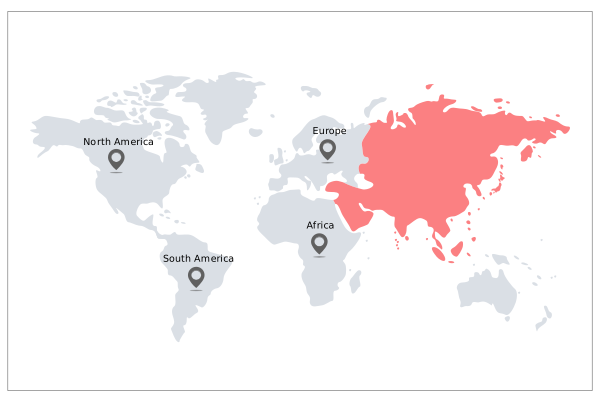
Asia-Pacific's Dominance in the Thermo-mechanical Control Process Steel Market
Several key factors contribute to the potential of Asia-Pacific Thermo-Mechanical Control Process (TMCP) Steel market share, making it the leading region in TMCP steel production and consumption Countries such as China, India and South Korea has seen tremendous growth These countries have witnessed rapid urbanization and industrialization, which has increased the demand for high-quality steel products to support manufacturing, automobile manufacturing and other industrial applications.
In addition, Asia-Pacific benefits from favorable economic conditions, government initiatives aimed at promoting infrastructure development and infrastructure investment Policy to support infrastructure sectors such as transportation networks, energy sector and urban development policies have further increased the demand for TMCP steel in the region The reason has been facilitated the production of high quality TMCP steel products to meet the growing demand.
KEY INDUSTRY PLAYERS
Factors Contributing to Market Leadership through Innovation and Global Strategy
Several factors contribute to the market leadership of the industry in the Thermo-Mechanical Control Process (TMCP) Steel market. One of their main strengths is their unwavering commitment to innovation and excellence. These private companies devote substantial resources to R&D programs related to TMCP software development and steel construction development Through sustained innovation the technological capabilities of TMCP steel can be developed , it has improved its performance in various applications and meet evolving customer needs. Furthermore, the market leaders in the TMCP steel industry prioritize high-end steel and grades designed for specific applications They use their expertise in manufacturing science and engineering design to develop intentionally designed solutions to solve specific problems facing industries such as automotive, construction and construction . By offering more TMCP steel products, more applications can be fulfilled and more competitive in the market.
List of Market Players Profiled
- Hyundai Steel (South Korea)
- JFE Steel (Japan)
- Nippon Steel (Japan)
- Victor Steel (India)
- POSCO (South Korea)
- Dongkuk (South Korea)
- NLMK (Russia)
- Baosteel (China)
- Ansteel (China)
- Shaougang (China)
- TISCO (China)
- Voestalpine AG (Australia)
INDUSTRIAL DEVELOPMENT
May, 2022: The thermo-mechanical control system metal market continues to adapt, with new packages and industries exploring the capacity of this unique metallic As demand for high-overall performance merchandise will increase, TMCP metallic reveals packages in regions consisting of renewable energy, which includes its intensity and distribution for wind turbine additives and sun energy plant structures Importantly, further, the industry is focused on sustainable practices , consisting of efficient recycling of TMCP metals for the duration of manufacturing and lower environmental footprint all through manufacturing.
REPORT COVERAGE
This report is based on historical analysis and forecast calculation that aims to help readers get a comprehensive understanding of the global Thermo-mechanical Control Process Steel Market from multiple angles, which also provides sufficient support to readers’ strategy and decision-making. Also, this study comprises a comprehensive analysis of SWOT and provides insights for future developments within the market. It examines varied factors that contribute to the growth of the market by discovering the dynamic categories and potential areas of innovation whose applications may influence its trajectory in the upcoming years. This analysis encompasses both recent trends and historical turning points into consideration, providing a holistic understanding of the market’s competitors and identifying capable areas for growth.
This research report examines the segmentation of the market by using both quantitative and qualitative methods to provide a thorough analysis that also evaluates the influence of strategic and financial perspectives on the market. Additionally, the report's regional assessments consider the dominant supply and demand forces that impact market growth. The competitive landscape is detailed meticulously, including shares of significant market competitors. The report incorporates unconventional research techniques, methodologies and key strategies tailored for the anticipated frame of time. Overall, it offers valuable and comprehensive insights into the market dynamics professionally and understandably.
- 26434705
- Asia Pacific
- 129
Clients














.jpg "Samsung")








.png "Samsung")




Top Trending
Contact Information


Frequently Asked Questions
-
What value is Thermo-mechanical Control Process Steel Market expected to touch by 2032?
The Thermo-mechanical Control Process Steel Market is expected to reach USD 583.31 million by 2032.
-
What CAGR is the Thermo-mechanical Control Process Steel Market expected to exhibit by 2032?
The Thermo-mechanical Control Process Steel Market is expected to exhibit a CAGR of 5.10% by 2032.
-
Which are the driving factors of the Thermo-mechanical Control Process Steel Market?
Decentralization and Redundancy and High Availability and Fault Tolerance are some of the driving factors of the market.
-
What are the key Thermo-mechanical Control Process Steel Market segments?
The key market segmentation that you should be aware of, which include, based on type the Thermo-mechanical Control Process Steel Market is classified as 5 – 20 mm, 20 – 50 mm, 50 – 100 mm, 100 – 120 mm. Based on application Thermo-mechanical Control Process Steel Market is classified as Chemical Industry, Building, Machinery, & Others.